

Must-Have Makeup Essentials
Step into a world where ethereal beauty meets timeless elegance – the world of moonstone jewelry. With its enchanting play...
read more

LED face masks are among the most expensive viral skincare purchases of 2026. Red and near-infrared light are marketed for visible signs of ageing, while blue or combined blue-red devices are sold for acne. Evidence supports a possible benefit for some well-specified devices, but the category is not uniform. Wavelength, irradiance, treatment time, fit and study quality all matter.
Red and near-infrared light are forms of photobiomodulation. They are studied for effects on cellular energy, inflammation and processes related to collagen and repair. At-home devices are generally less powerful than in-office equipment, so improvements tend to be gradual and variable rather than dramatic.
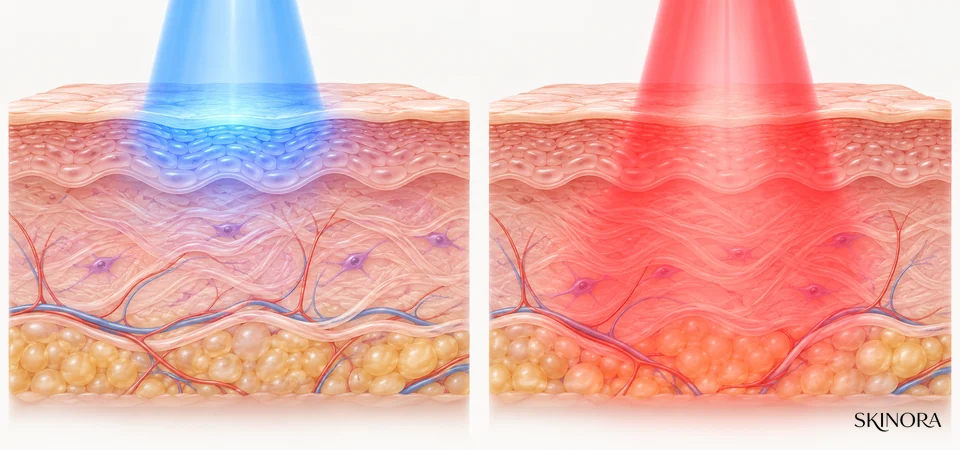
Blue light targets acne-associated bacteria more directly and is often combined with red light. A 2026 evidence review found moderate-quality support for home blue and blue-red LED devices for acne, while the evidence for red LED alone was lower quality. For facial rejuvenation, home LEDs had moderate evidence overall.
This does not make an LED mask a replacement for a complete acne plan. Begin with proven topical care such as the approach in our salicylic-acid guide or the body-acne routine when the concern extends beyond the face.
In a randomised sham-controlled 2025 study, a home mask combining 630 nm red and 850 nm infrared light improved crow’s-feet scores over 16 weeks. That result applies to the tested device and schedule, not every mask with red bulbs.
The American Academy of Dermatology describes facial results as ranging from subtle to noticeable and emphasises that studies use different devices and treatment times. Consistency may matter, but more time or higher intensity than the manual states is not safer or necessarily better.
Do not choose by the number of colours alone. Look for:
In the United States, FDA-cleared means a device has completed a regulatory pathway and is considered low risk for its stated use. It does not mean every marketing claim is proven, and phrases such as FDA certified should be treated cautiously. Rules differ across countries, so verify the relevant local documentation.
Follow the manual exactly. Begin with clean, dry skin unless the device specifically allows a compatible product underneath. Do not add photosensitising or irritating actives simply to intensify a session. Clean the device as directed and never share a mask without hygienic preparation.
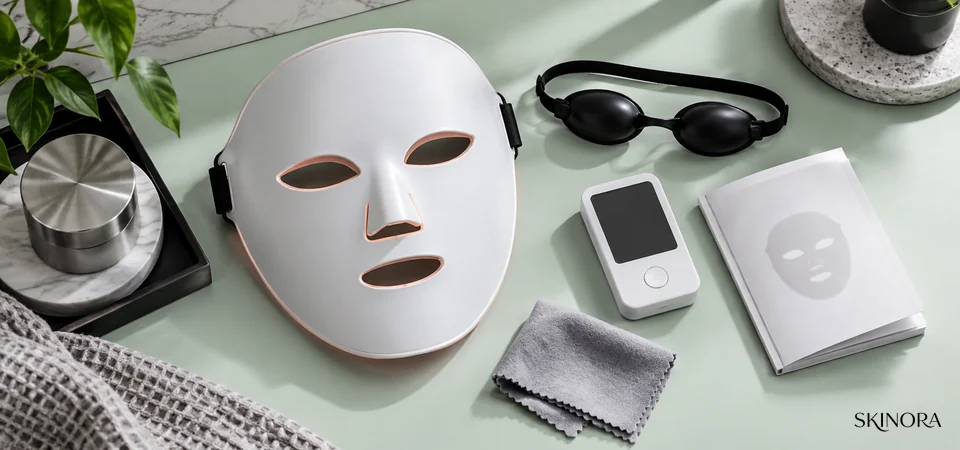
Use the supplied or recommended eye protection whenever instructed. Stop for pain, persistent redness, worsening pigmentation, headache or eye discomfort. If the skin is already irritated, simplify it using the sensitive-skin routine rather than layering a device onto inflammation.
Ask a dermatologist before use if you have a photosensitive condition such as lupus, take medication that increases light sensitivity, have an active skin disease, are treating eye disease or recently had a procedure. The AAD also notes that darker skin tones may be more sensitive to visible light and may require individual guidance because of hyperpigmentation risk.
Consider LED an optional complementary step. It comes after the basics are stable: gentle cleansing, suitable moisturiser and daily broad-spectrum sunscreen. Read the sunscreen-order guide if morning layering is unclear.
Track one target for at least the device’s recommended trial period, using photographs in consistent light. If you cannot maintain the schedule, the mask causes irritation or the same budget would be better spent on sunscreen and a proven treatment, it may not be the right purchase.