
Niacinamide for Skin: Benefits, Strengths and How to Use It
Niacinamide is a versatile form of vitamin B3 used in serums and moisturizers. It can support barrier function, hydration and...
read more
Growth-factor serums sit at the centre of the 2026 skin-longevity trend. They use proteins or biomimetic peptides intended to echo signals involved in renewal and repair. Clinical literature suggests some topical preparations can produce modest improvements in texture, fine lines and overall appearance, but products differ greatly and the evidence does not justify treating every growth-factor formula as a miniature injectable procedure.
Growth factors are signalling molecules that help coordinate processes such as cell communication, repair and extracellular-matrix activity. Names seen in cosmetics include EGF, IGF and TGF-related technologies. A formula may contain human-derived, plant-made, microbial or synthetic biomimetic components, depending on the product and region.

The important question is not whether growth factors exist in skin. It is whether a stable topical formula can deliver a useful signal through an intact barrier and whether the finished product has human data. Large molecules, formulation stability and delivery make this more complicated than an ingredient list alone suggests.
A 2023 systematic review included 33 studies and 1,180 participants using 23 topical preparations. Investigator-rated improvements were generally modest, and only nine studies used a placebo or active control. Three comparative randomised trials found no statistically significant difference between treatments. The review also noted major variation in growth-factor source, additional ingredients and outcome measures.
That means the category is promising but difficult to generalise. A result from one proprietary mixture does not prove the same effect for another serum. Long-term persistence beyond six months also remains uncertain.
Growth factors overlap conceptually with peptides and regenerative trends such as topical PDRN, but the ingredients, evidence and delivery systems are not interchangeable.
A growth-factor serum may interest someone focused on visible texture, fine lines or a supportive age-care routine and willing to use the product consistently for several months. It is usually an optional treatment step, not a basic necessity.
Sunscreen, a suitable moisturiser and proven actives often deserve priority. If you are new to age-support skincare, the beginner retinol guide provides a better-established starting point. Daily sunscreen in the correct order protects against ongoing UV damage that no serum can cancel.
Follow the specific label. Most water-based serums are applied after cleansing and before moisturiser, but frequency and incompatibilities vary. Patch test first, introduce only one new product and keep the rest of the routine stable.
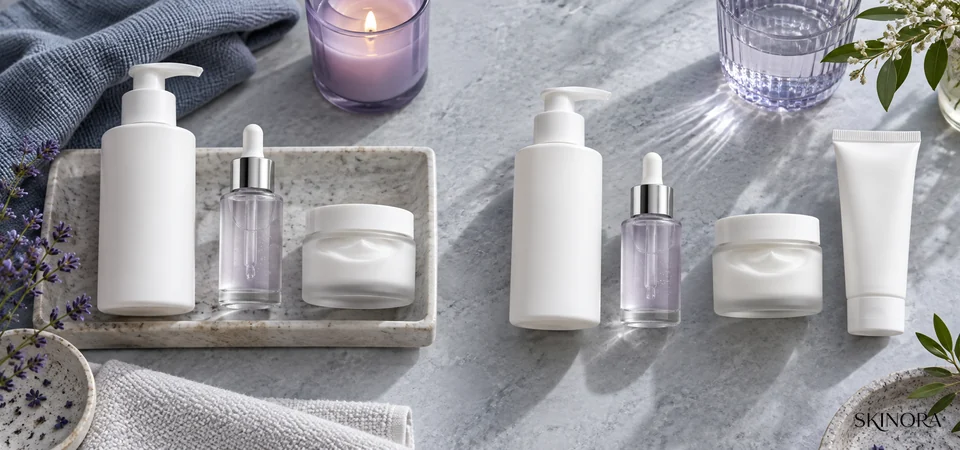
A simple structure is:
Morning: gentle cleanse, growth-factor serum if directed, moisturiser, broad-spectrum SPF.
Evening: cleanse, growth-factor serum if directed, moisturiser.
If you already use retinoids, acids or strong vitamin C, do not assume every combination is suitable. Check the current manufacturer guidance and separate steps or alternate nights if irritation makes the routine hard to interpret.
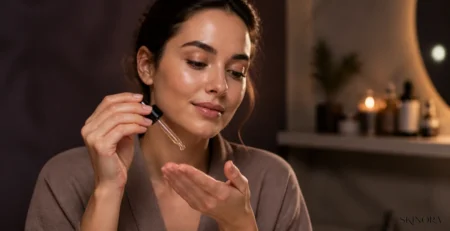
The Ordinary GF 15% Solution was verified as published and in stock when this article was prepared. The brand describes a water-based formula using plant-made biomimetic EGF-, IGF- and TGF-related peptides and directs a few drops morning and evening. Treat those as product-specific claims and instructions, not rules for the entire category.
Topical studies generally report a low rate of adverse effects, but independent long-term evidence is limited. Do not apply a growth-factor cosmetic to broken, infected or recently procedured skin unless the treating clinician approves it. Stop for swelling, hives, blistering or persistent inflammation.
Expect gradual, subtle change rather than a lifting or filling effect. Take baseline photographs in consistent light and assess after the product’s stated trial period. If a serum replaces sunscreen, causes ongoing irritation or strains the budget, the routine has lost its priorities.