

Niacinamide for Skin: Benefits, Strengths and How to Use It
Niacinamide is a versatile form of vitamin B3 used in serums and moisturizers. It can support barrier function, hydration and...
read more

PDRN moved from Korean clinics into eye creams, serums and masks, making it one of 2026’s most talked-about skincare ingredients. The trend needs careful interpretation. PDRN in a cosmetic cream is not the same intervention as an injectable treatment, and clinical results from a needle-based procedure cannot automatically be used to promise what a topical product will do.
PDRN stands for polydeoxyribonucleotide, a mixture of DNA-derived fragments. Medical and aesthetic research has explored polynucleotide and PDRN preparations in tissue repair and injectable skin procedures. The exact source, fragment size, purification method and finished formulation can differ between products.
Some newer cosmetics use biotechnology-derived or fermentation-related alternatives and may describe them with terms such as plant PDRN or lacto-PDRN. These names do not establish equivalence with the preparations used in published clinical procedures. Read the brand’s ingredient explanation instead of assuming every “PDRN” label refers to one standard material.
Recent systematic reviews report encouraging improvements in hydration, texture, elasticity or wrinkle appearance after PDRN or polynucleotide procedures. The important limitation is that the trials are small, methods differ and much of the evidence concerns injections or clinician-administered therapies.
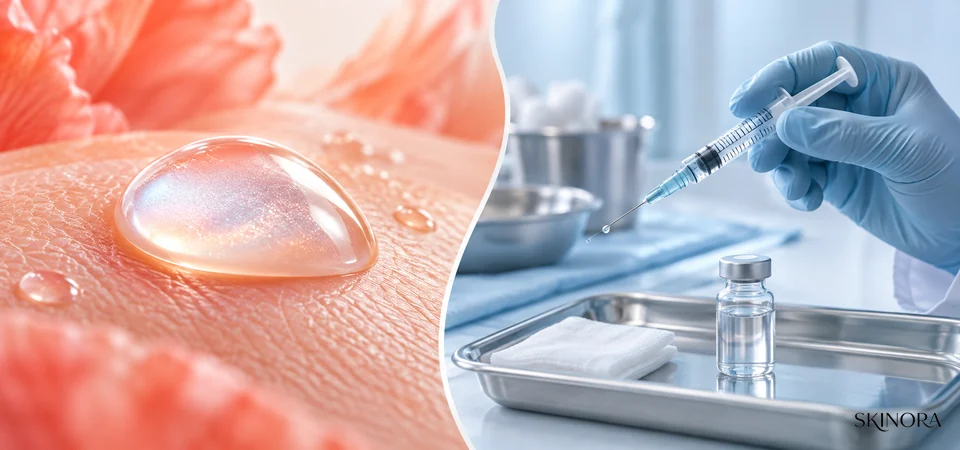
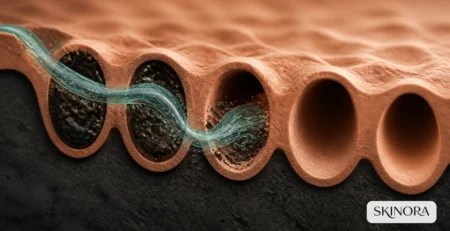
Topical cosmetics face an additional delivery question: large or charged molecules may not pass through intact skin easily. A cream may still moisturise well because of its full formula, but that result does not prove that DNA fragments reached the same tissue level as an injection. More product on the surface cannot reproduce a medical procedure.
For a serum or cream, reasonable goals are improved hydration, a smoother surface and a more rested appearance, depending on the supporting ingredients. Claims that it “regenerates skin,” replaces injectables or permanently removes wrinkles go beyond what current topical evidence can confirm.
Judge the complete ingredient list. Humectants, emollients, peptides and barrier-supporting ingredients may contribute substantially to the visible result. Our hyaluronic acid guide explains how hydration alone can temporarily soften dehydration lines.
Follow the exact label because PDRN products are not standardised. A general cosmetic sequence is:
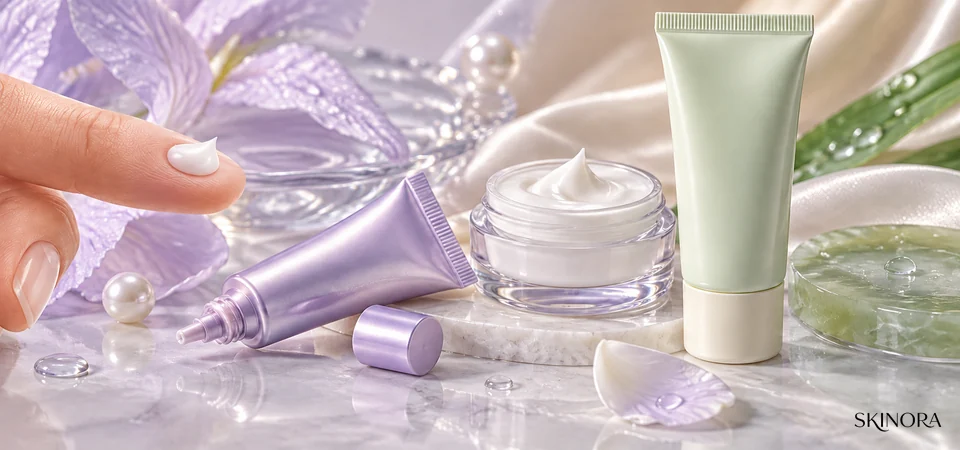
Do not apply a cosmetic over broken skin after a home microneedling device or try to increase penetration with needles. That changes the risk of contamination, irritation and injury. Procedures that breach the skin belong in qualified clinical settings.
The Ordinary Lacto-PDRN 4% + B9 Eye Cream was verified as published and in stock when this article was prepared. It is an eye-area cosmetic with a brand-specific lacto-PDRN complex, not an injectable PDRN treatment. Use it only as its current label directs.
Traditional medical PDRN is often discussed in connection with salmon-derived DNA, which raises understandable allergy, origin and ethical questions. Cosmetic products may use different sources. Check the brand’s official information if source matters to you, and do not rely on social-media shorthand.
Patch test a new formula. Avoid applying it to infected, actively inflamed or damaged skin unless a clinician has advised otherwise. Stop if swelling, hives, persistent burning or eye irritation develops. Pregnant or breastfeeding users and people with known fish allergy should ask a qualified clinician about a specific product when the source or safety data is unclear.
PDRN is optional. It should not displace sunscreen, an effective moisturiser or a treatment with stronger evidence for your main concern. If the barrier is uncomfortable, start with the practical steps in our ceramide guide and hyaluronic acid guide before adding a trend-led product.
When comparing progress, keep the rest of the routine stable and take monthly photographs under the same light. If an eye-area change is sudden, one-sided, painful or accompanied by vision symptoms, seek medical assessment rather than adding skincare.