

Damaged Skin Barrier: Signs, Causes and a Simple Repair Routine
A compromised skin barrier can feel tight, sting when products are applied and become unusually dry or reactive. A short,...
read more

A good sensitive skin routine is intentionally short: gentle cleansing, a fragrance-free moisturiser and daily broad-spectrum sunscreen. Add only one new product at a time and test it first. “Sensitive skin” describes a reaction pattern, not one diagnosis, so persistent burning, rash or swelling needs professional assessment.
Sensitive skin may sting, burn, itch or become red after products that other people tolerate. A damaged barrier, contact allergy, eczema, rosacea, over-exfoliation and prescription treatments can all produce similar symptoms. This is why a skincare article cannot diagnose the cause.
For a temporary reset, pause optional acids, scrubs, retinoids and fragranced products. Keep the routine stable until ordinary cleansing and moisturising feel comfortable again.
Morning
Evening
Choose “fragrance-free,” not merely “unscented.” Unscented products may still contain ingredients that mask a smell. Keep ingredient lists manageable and avoid assuming that natural or botanical means gentler.
The Ordinary Squalane Cleanser and The Ordinary Soothing & Barrier Support Serum are verified in-stock options. They illustrate gentle cleanser and barrier-support categories; individual tolerance still varies.
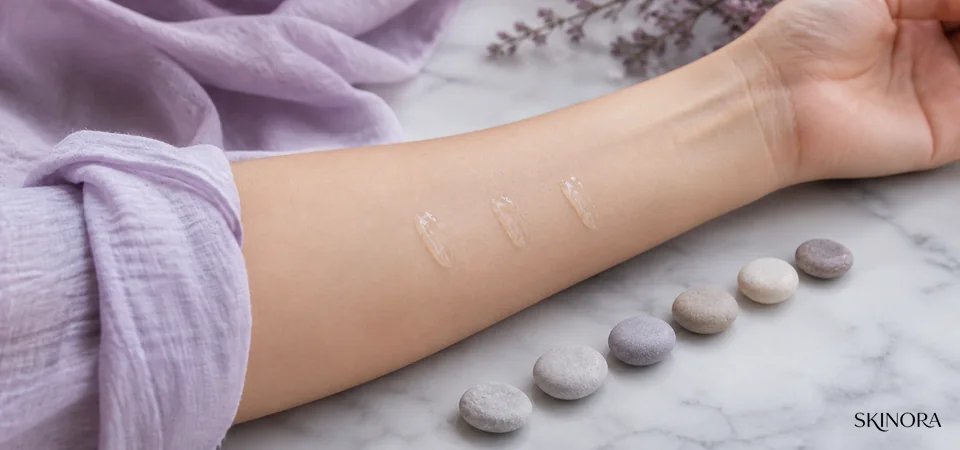
The American Academy of Dermatology suggests applying a normal amount to a small area, such as the underside of the arm, twice daily for 7–10 days. Leave a wash-off product on for its instructed contact time. If redness, itching or swelling appears, wash it off and do not move straight to the face.
A home test cannot rule out every delayed allergy. If reactions recur or the responsible ingredient is unclear, a dermatologist may recommend formal patch testing.
After several calm weeks, choose one active for one priority. Begin less often than the maximum label frequency. Do not introduce retinol, an exfoliating acid and a new vitamin C formula together.

If an active causes persistent stinging, redness or scaling, stop it and return to the base routine. The skin barrier guide explains how irritation and barrier stress can overlap.
Daily sun protection matters, but the best formula is the one you can apply adequately. Mineral filters such as zinc oxide and titanium dioxide may suit some sensitive skins, although no filter is irritation-proof. Test the full sunscreen formula because preservatives, fragrance and texture ingredients also matter.
The Ordinary Mineral UV Filters SPF 30 with Antioxidants is listed as fragrance-free and is currently in stock. This is catalog information, not a guarantee for reactive skin.
Seek medical help for facial swelling, hives, blistering, trouble breathing, a painful or spreading rash, eye involvement or a reaction that does not settle. Repeated stinging from almost every product is also worth discussing with a dermatologist rather than continuing to buy new formulas.