
Must-Have Makeup Essentials
Step into a world where ethereal beauty meets timeless elegance – the world of moonstone jewelry. With its enchanting play...
read more
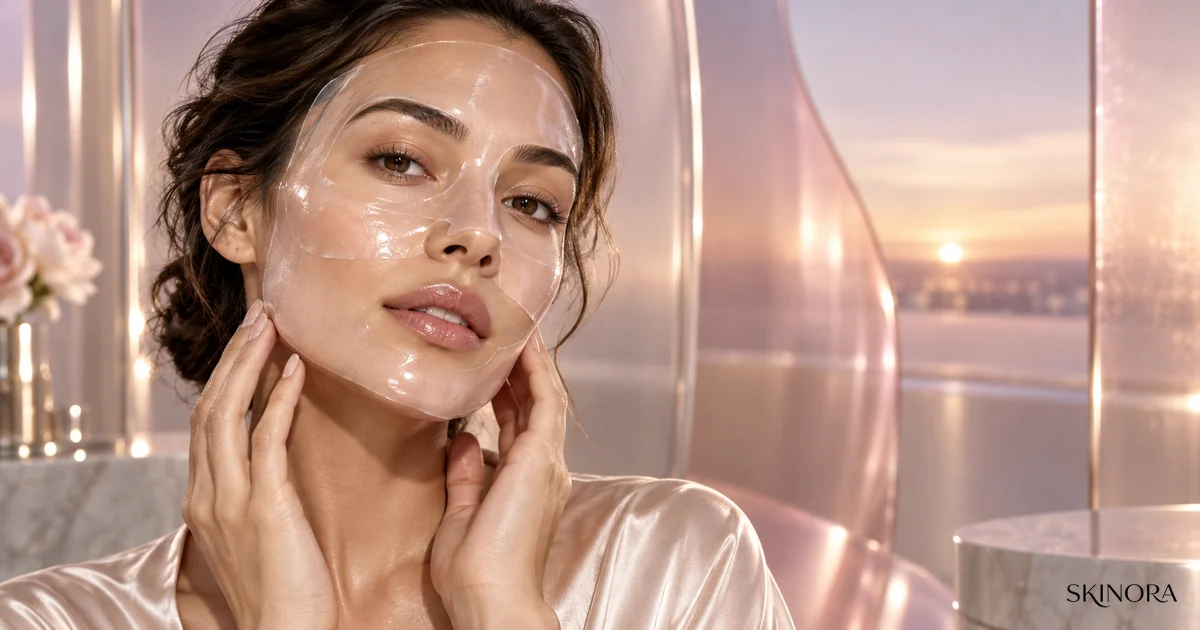
Transparent hydrogel masks and collagen creams are producing some of the most shared skincare images of 2026. Their immediate result can be real: an occlusive, water-rich formula may soften the surface, reduce temporary dryness and make fine dehydration lines look less obvious. That does not mean the collagen printed on the packet has travelled into the dermis and rebuilt the skin’s own collagen network.
Collagen is a large structural protein naturally found in the dermis. Traditional collagen used in a cream or mask generally works mainly at the surface as a moisturising, film-forming ingredient. Hydrolysed collagen contains smaller fragments and can contribute humectant and conditioning properties, but penetration and biological effects depend on molecular size and the full delivery system.
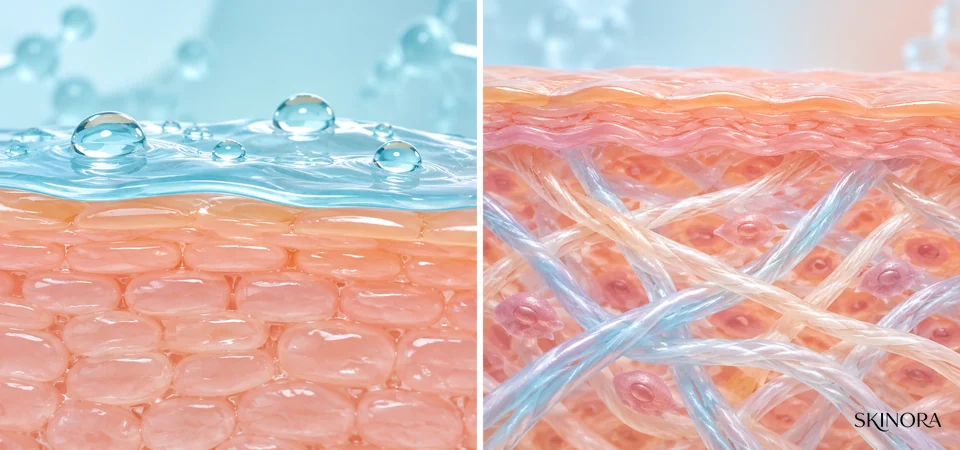
Research is exploring specialised low-molecular and engineered delivery methods. Those studies should not be used to claim that every sheet mask stimulates new collagen. Read the ingredient list and the evidence for the complete product, not only the word collagen on the front.
Hydrogel and bio-cellulose masks hold a water-rich formula against the face. Occlusion slows evaporation for a period, so the outer layer absorbs water and looks smoother. Humectants such as glycerin or hyaluronic acid, emollients and soothing ingredients may contribute more to the immediate finish than collagen itself.
The change is usually temporary. A mask can be useful before an event or during a dry period, but it does not replace daily moisturiser or sunscreen. For a better long-term hydration strategy, read how to apply hyaluronic acid to damp skin and our guide to ceramides in moisturisers.
Start with the skin concern rather than the viral format:
Products combining collagen with peptides can sound interchangeable, but they are not. Our peptide guide explains signal peptides and the limits of cosmetic claims.
Patch test a new formula and follow its stated wear time. A mask designed for 20 minutes should not stay on overnight. Longer contact can increase irritation or allow an exfoliating, fragranced or active formula to become more uncomfortable. Do not wait for a mask to become painfully tight or completely dry unless the manufacturer specifically directs that use.
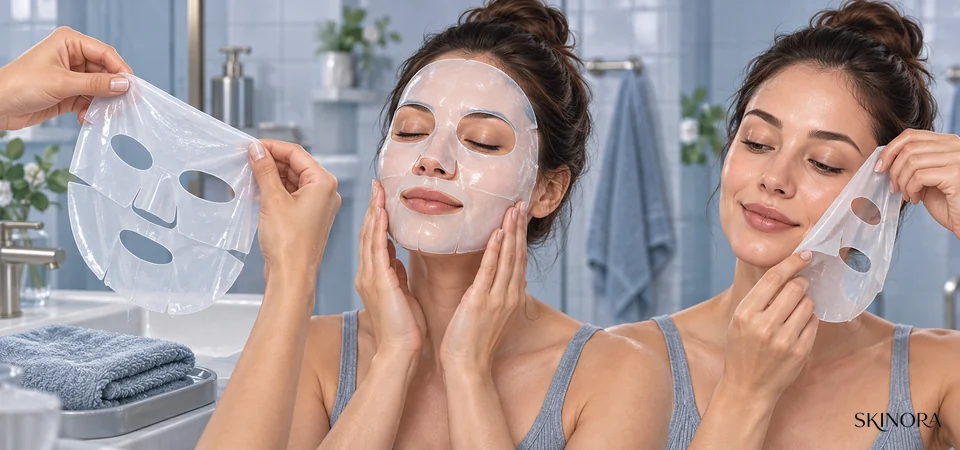
Apply to clean skin, smooth it without aggressive pulling, remove gently and press in the remaining serum. Add moisturiser only if needed. Avoid combining a new mask with a first use of retinol, a peel or several acids on the same evening. The beginner retinol guide offers a steadier introduction.
Stop if burning, swelling, hives or a persistent rash develops. Acne-prone skin may prefer a lighter, shorter-wear formula if rich occlusion repeatedly leads to congestion.
Daily broad-spectrum sunscreen is the most important cosmetic step for limiting UV-driven collagen breakdown. Retinoids have stronger evidence for improving photoaged skin than ordinary collagen creams, though they require gradual introduction and are not suitable for everyone. Adequate sleep, not smoking and a balanced diet support general skin health, but no single mask can compensate for chronic UV exposure.
A collagen mask can still be enjoyable and useful. Buy it for hydration, comfort and a temporary plumped look, not because a viral before-and-after promises structural rebuilding overnight.