
Niacinamide for Skin: Benefits, Strengths and How to Use It
Niacinamide is a versatile form of vitamin B3 used in serums and moisturizers. It can support barrier function, hydration and...
read more 
Exosome skincare has become one of the loudest regenerative-beauty stories of 2026. Serums and post-procedure products promise firmer, smoother or faster-recovering skin, often borrowing language from cell biology. The idea is plausible, but the products sold under the same trend can differ sharply in source, processing, concentration and delivery. That makes the label more difficult to judge than a familiar ingredient such as niacinamide.
Exosomes are tiny extracellular vesicles released by cells. They can carry proteins, lipids and genetic material involved in communication between cells. Research is exploring these vesicles in wound healing, inflammation and tissue repair. In beauty, the word may refer to human-cell-derived vesicles, animal-derived material, plant extracellular vesicles or formulas described only as exosome-inspired.
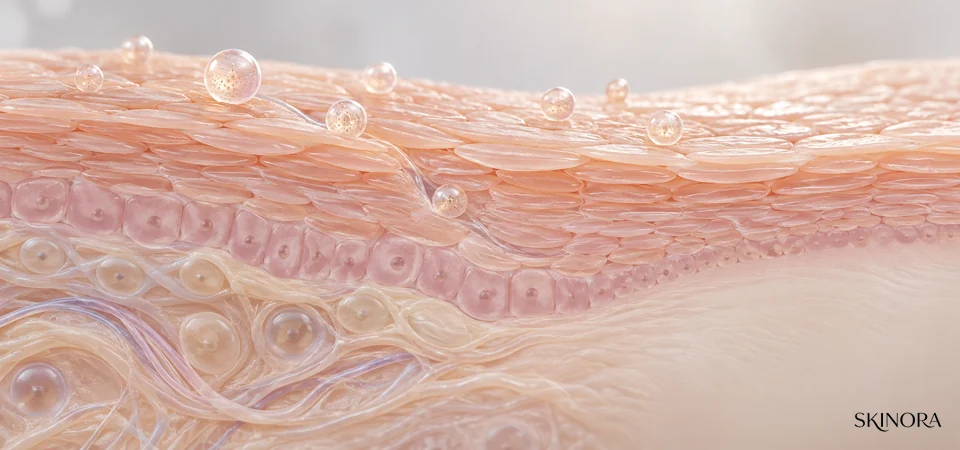
These are not interchangeable categories. A cream containing plant vesicles cannot automatically be assumed to act like vesicles produced by human cells. It is also worth separating exosomes from growth factors and PDRN. They may appear in the same regenerative marketing story, but they are different materials with different evidence.
Recent systematic and scoping reviews report early improvements in hydration, texture, wrinkles, pigmentation and elasticity in some human studies. The important limitation is that many trials are small, short, non-randomised or combine exosomes with microneedling or laser treatment. When a procedure creates channels in the skin, it is difficult to know how much of the result came from the topical product alone.
A 2026 scoping review found only 18 studies after screening more than 2,000 records and noted that commercial products often give little information about source, isolation, processing or shelf life. Another 2026 review rated the overall certainty for facial rejuvenation as low or very low. This is a promising research area, not a settled replacement for retinoids, sunscreen or clinical procedures.
Social posts sometimes place an at-home serum, a professional add-on after microneedling and an injected product in one category. Their risk is not the same. The US FDA has warned about unapproved exosome products marketed to treat diseases, particularly injected products. Do not inject a cosmetic serum or use it on freshly needled, lasered or broken skin unless the treating clinician has selected that exact product and protocol.
The same caution applies to viral delivery formats. Our guide to spicule skincare explains why increasing penetration can also increase irritation and uncertainty.
Look beyond the word exosome. A credible seller should disclose the vesicle source, complete ingredient list, manufacturer, storage instructions, expiry information and intended use. Be cautious when the page relies on before-and-after images but does not explain whether the formula was tested alone or after a procedure.
Useful questions include:
Patch test first and keep the rest of the routine stable. If the barrier is sore, peeling or inflamed, begin with the damaged-barrier guide instead of adding a complex trend product.
A well-described topical formula may be an optional experiment for someone who already has a reliable routine and accepts uncertain value. It should not replace daily broad-spectrum sunscreen, a suitable moisturiser or evidence-based treatment. Persistent redness, swelling, pain, discharge or a reaction after a procedure needs medical assessment rather than another layer of serum.